USE THE CODE: "PEICE" AT CHECKOUT FOR 10%

The Heart of Honi
I asked ChatGPT to write me a short story about a hibiscus and this is what they gave me🥹
10/23/20252 min read
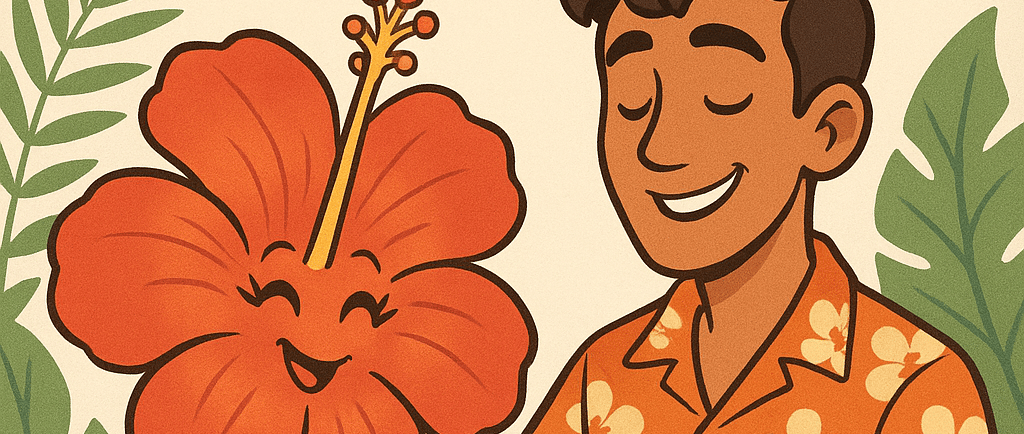
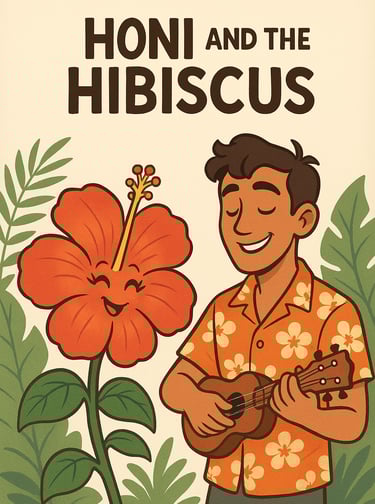
Long ago, on a tiny, quiet island in the middle of the wide blue Pacific, there grew a hibiscus named Honi.
She wasn’t just any hibiscus. Honi had the biggest, brightest blossoms on the island — fiery coral-red petals with golden tips that looked like they’d been kissed by the sun itself. She grew on a cliffside, right above a little cove where the waves came to nap each afternoon.
The islanders believed she had mana — spiritual power. Some said she was the spirit of an old love goddess. Others claimed she was just very good at photosynthesis.
But Honi? She didn’t care much for legends. She cared about one thing: Makaio.
Makaio was a musician — a gentle-hearted, barefoot ukulele player who came every day to sit by the cliff and sing to the sea. His voice was soft like coconut cream and sweet like ripe mango. Honi loved him. Not in the I-want-to-marry-you-and-make-hibiscus-babies kind of way, but in the I-want-you-to-be-happy-forever way.
Each time Makaio sang, Honi would bloom. One flower, then two, then five, then ten. She’d puff her petals up like a bird of paradise on a first date.
He’d smile at her, pluck a blossom, tuck it behind his ear, and say, “Still the most beautiful girl on the island, eh?” Honi would nearly wilt from the compliment.
But seasons change. And people change too.
One day, Makaio stopped coming.
The waves still napped in the cove. The birds still sang. The breeze still swayed through the palms.
But Makaio was gone.
Days turned into weeks. Weeks into months. Honi stopped blooming. Not out of spite — but sadness. What’s a songbird without a song?
Then one morning, a woman arrived.
She was young, fierce-looking, with sea-wind hair and a tattoo of a turtle on her shoulder. She carried a weathered ukulele.
She sat where Makaio used to sit, stared out at the sea, and said, “You must be Honi.”
Honi perked up a little. A tiny bloom peeked out.
“My grandfather told me about you,” the woman continued. “He said he used to sing here when he was young. Said you were magic.”
She strummed a few chords — hesitant, rusty. But there it was. The tune. Makaio’s tune, soft and familiar like a memory that still smells like salt and sunscreen.
And just like that, Honi burst into bloom.
The woman laughed. “He was right. You are magic.”
Over the next weeks, the woman — her name was Leilani — came every day. She played. She sang. She even told Honi stories about the world beyond the island: cities made of glass, snow that tasted like sky, trains that ran faster than dolphins.
Honi listened. Bloomed. Laughed with her leaves.
One day, Leilani said, “I think I’ll stay.”
So she built a little hut near the cliff, planted more flowers, and invited children to sit and sing with her by the sea. Honi’s cliff became a place of music again. A place of laughter, stories, and blossoms.
And though Makaio never returned in the flesh, his spirit lived in the strum of Leilani’s songs — and in the blossoms of a hibiscus who once fell in love with a boy and learned that love, like flowers and songs, grows best when shared.
THE END
Explore our handcrafted pieces, made to feel tika — just right.
© 2025. All rights reserved.
Useful Links